
AI Content Creation: Why Human Creativity Still Matters in 2026
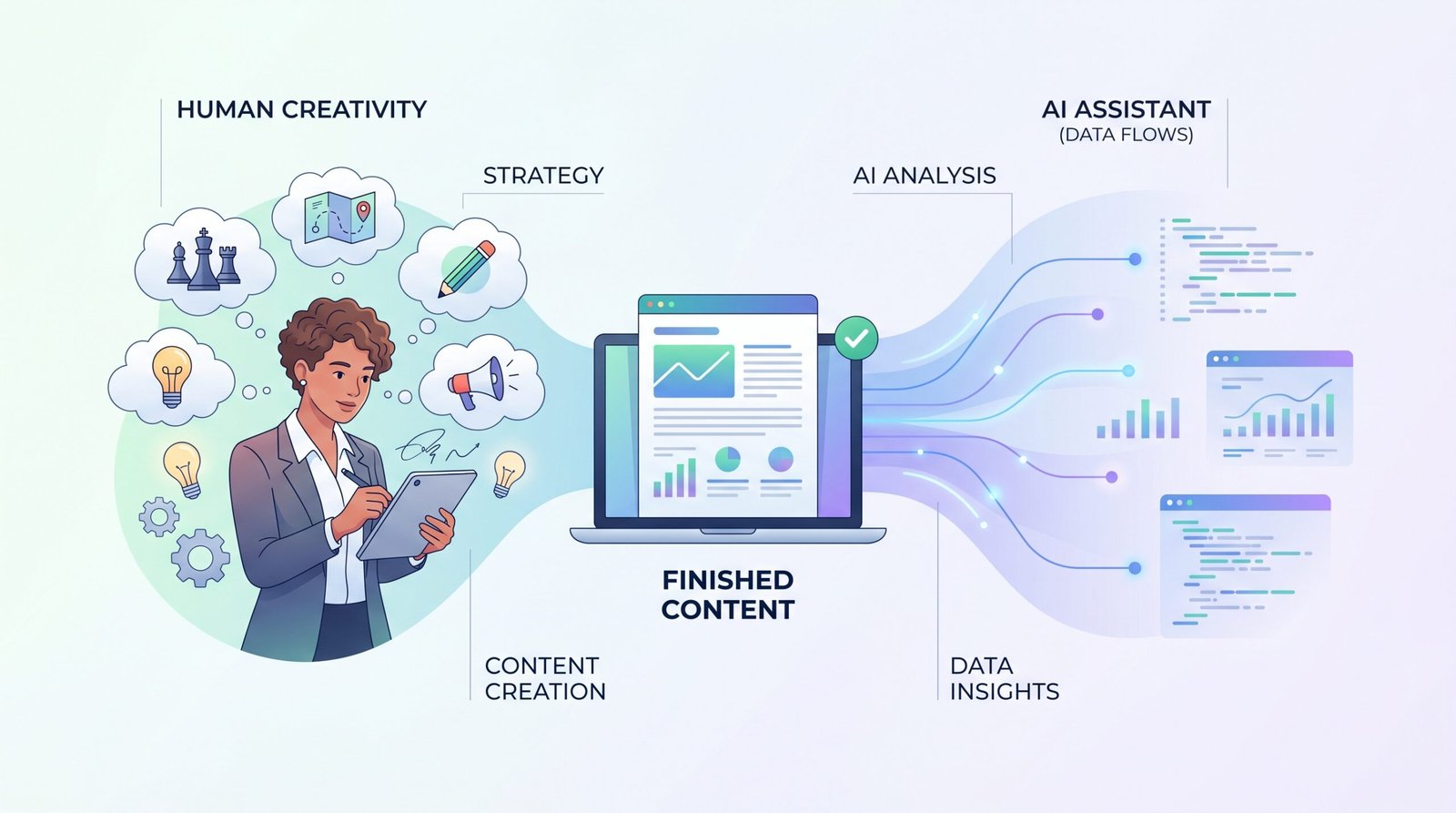
A few years ago, making content was a slow process. You had to think of ideas, research the topic, write it, and edit it. Then, finally, publish it. Today, AI can do a lot of that work in minutes. Whether it’s blog posts, media captions, emails or website content, AI has made content creation super fast. For business owners and marketers, that’s a plus. Most businesses know they should create content regularly, but finding time to do it is often a challenge.
That’s one of the reasons AI content creation has taken off so quickly.
Need blog ideas? AI can give you some. Need Instagram captions? AI can give you twenty options in seconds. Need a draft for an article? AI can handle that too. It’s easy to see why businesses are using these tools. They save time, reduce workload and help teams create content more than ever before.
But as AI becomes a part of content marketing, another question comes up: If AI can create content so quickly, do businesses still need human writers? The answer is yes. Not because AI is bad at writing. Because good content is about more than just putting words on a page. More Content Doesn’t Automatically Mean Better Content
One of the mistakes businesses make is thinking that publishing more content will automatically bring better results. It sounds logical. If one blog post is good, five blog posts should be even better. Content marketing doesn’t really work like that.
People don’t keep coming because a brand posts often. They come back because the content is useful, memorable or genuinely interesting. Think about the businesses, creators or brands you enjoy following. Chances are, it’s not because they’re posting every hour. It’s because their content feels genuine. You can tell there’s a person behind it. They have stories, opinions, experiences and lessons they’ve learned along the way. That’s the part AI still struggles to replicate.
What AI Content Creation Does Well
AI is a tool. It can help with research, content planning, brainstorming ideas, writing outlines and creating drafts. Instead of staring at a blank page, wondering what to write, businesses can start with a solid foundation and build from there.
For businesses, especially, that’s a huge benefit. Most business owners are already managing a workload. They’re managing customers, handling operations, responding to enquiries and trying to grow the business. If AI can save an hour every week on content creation, that’s valuable.
The problem starts when businesses expect AI to do everything. Creating content and creating content are two very different things.
The Problem With AI-Only Content
I recently came across a discussion where marketers talked about marketing trends they think are getting too much attention.
One comment stood out:
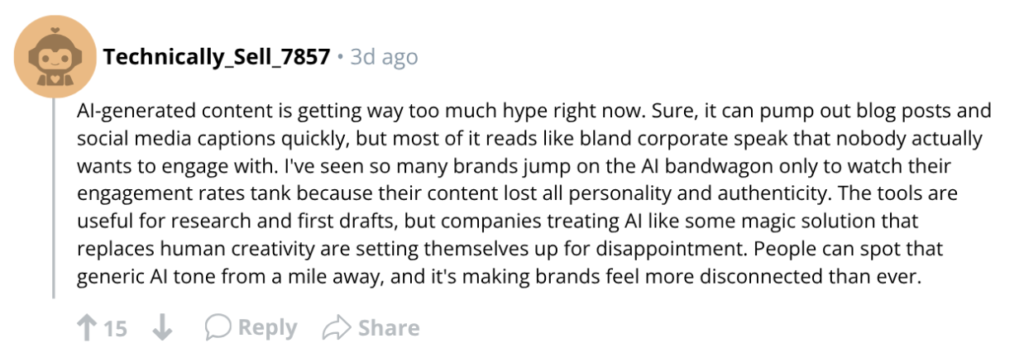
There’s some truth behind it. We’ve all seen content like this. It answers the question. It includes all the keywords. The grammar is perfect. Somehow it feels empty. You finish reading it and remember nothing. That’s because information alone isn’t what makes content valuable. If it were every article on the topic, it would perform equally well. They don’t. Content that stands out usually offers more than information. It includes experiences, examples, opinions, stories and insights that make the reader feel like they’re learning from a person.
Why Human Experience Still Matters
Those details are unique. They’re specific. Most importantly, they’re real. That’s the kind of content people connect with.
AI Is a Tool, Not a Strategy
Another marketer summed it up perfectly:
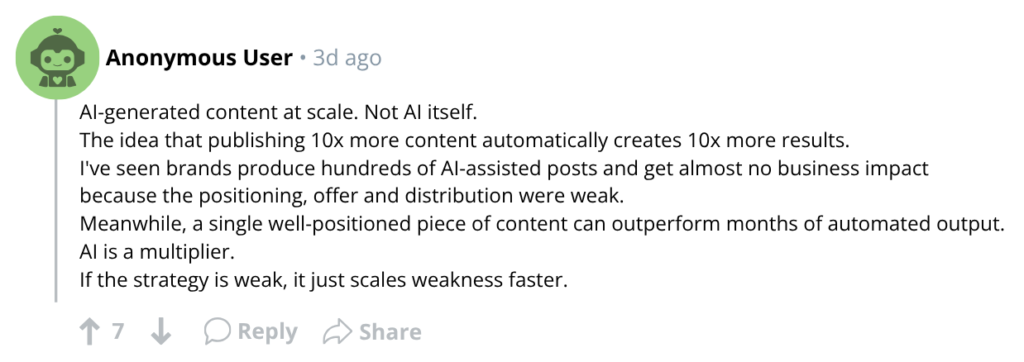
That might be one of the most accurate descriptions of AI content creation I’ve heard. Many businesses think AI content creation will solve their marketing problems simply because it allows them to publish content. If the content strategy is weak to begin with, creating more content won’t fix anything.
Imagine a business that doesn’t understand its audience. It doesn’t know what questions customers are asking. It doesn’t know what problems they’re trying to solve. If that business publishes one article each month, the results will probably be disappointing. If they use AI to publish twenty articles every month, they’ll simply get disappointing results faster.
Technology isn’t the problem. The strategy is.
Can AI Content Rank on Google?
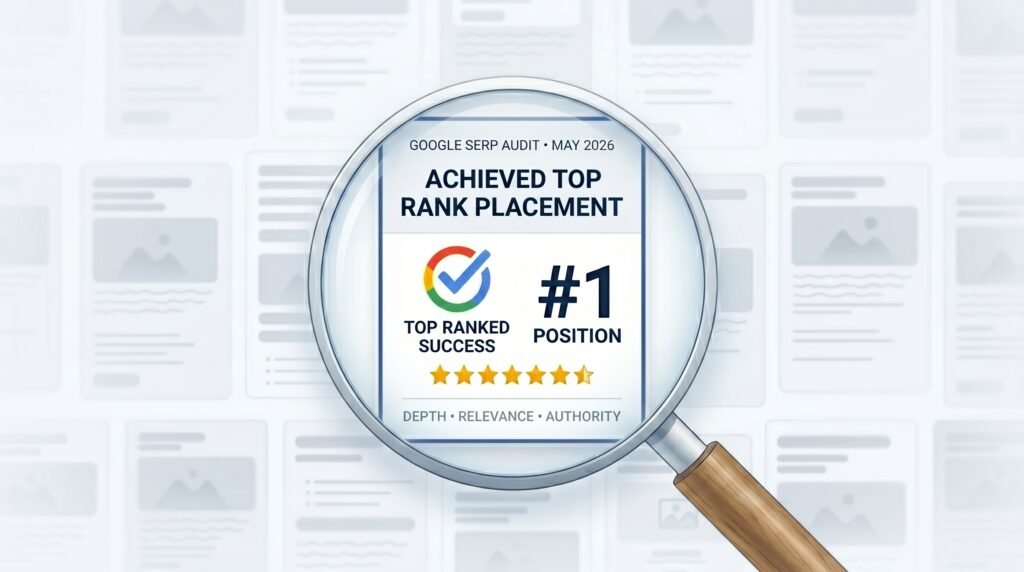
One question that comes up frequently is whether content produced through AI content creation tools can rank on Google. The short answer is yes. Google doesn’t automatically penalise content simply because AI was involved in creating it. What Google cares about is whether the content is helpful, relevant and useful to readers.
Many people assume that AI-written content can’t rank, while others assume that publishing hundreds of AI-generated articles will automatically bring traffic. Neither is true.
Google’s goal is to provide users with the answers to their questions. If your content helps people answer their questions and provides a reading experience, it can perform well no matter how it was created.
However, this is also where many businesses run into trouble. When AI is used without editing, fact-checking or adding insights, the content often becomes generic.
The information might be there. There’s often nothing that makes readers think, “I haven’t heard that before.” If ten websites publish identical AI-generated articles, there is very little reason for readers or search engines to choose one over the others.
This is why human expertise matters a lot. Real examples, first-hand experiences, industry knowledge and unique perspectives help content stand out. They make an article more useful and more trustworthy.
In other words, AI can help you create content that ranks, but human insight is often what helps it outperform competitors.
The Best Approach: Humans and AI Working Together
AI handles work. Humans handle the thinking.
A practical AI content creation workflow might look something like this: Use AI to research a topic. Use AI to generate ideas. Use AI to create a draft. Then add examples, experiences, opinions and insights. Finally, edit everything to match your brand voice and goals.
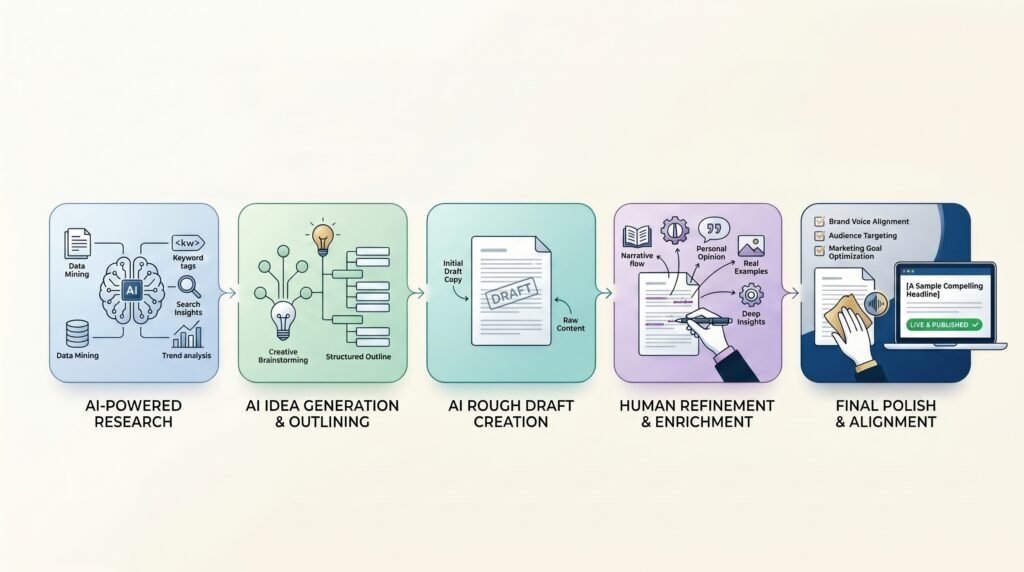
This approach gives you the best of both worlds and is often the most effective way to approach AI content creation. You get the speed and efficiency of AI without losing the authenticity that makes content worth reading.
The Future of AI Content Creation
When every business has access to the tools, the real difference won’t come from who can generate the most content. It will come from those who have valuable experiences, ideas and insights to share.
That’s why the future isn’t really about AI versus humans. It’s about finding a balance between the two. AI can help streamline AI content creation. Human creativity is what makes that content memorable.
If you’re looking to combine AI content creation with a strategy that delivers real business results, explore our services.